
Charlotte de Witte: with NAVA, techno gives a voice to Iranian women

What if artificial intelligence could become a tool for freedom of expression? That is the gamble of Charlotte de Witte, who has just announced "Azadi", a three-track EP made with NAVA, a virtual singer created by British-Iranian artist Farbod Mehr. Scheduled for release on November 5, 2026, on her KNTXT label, this project combines techno and Persian cultural heritage around a sensitive topic: the restrictions preventing women from singing publicly in solo in Iran.
NAVA is not a human singer using a digital avatar. It is a vocal project designed using artificial intelligence, conceived in 2025 by Farbod Mehr to represent Iranian women deprived of this artistic freedom. Her visual identity is inspired by the art and history of Iran, while her musical universe references Persian traditions. The project has already attracted a large online community, well before this collaboration with one of the leading figures of today's techno scene.
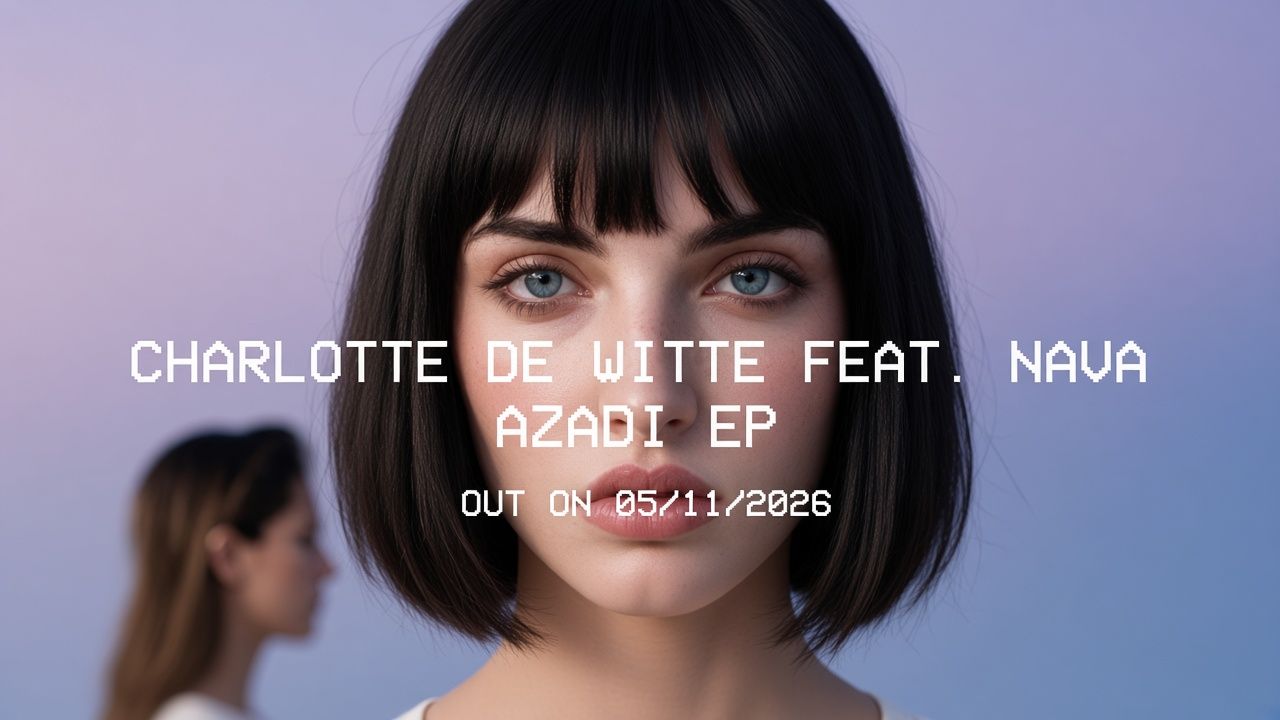
The EP will feature three tracks: "Azadi", "Omid", and "Tales Of The Desert". In Persian, azadi means "freedom" and omid means "hope". Musically, Charlotte de Witte retains her direct and powerful approach, with fast rhythms, acid sounds, and dark atmospheres. NAVA's vocals bring a different dimension to these productions, bridging Persian melodies and electronic tension. A snippet of "Tales Of The Desert" has already been revealed on social media, and the artist also played one of the tracks during her set on the Mainstage at Tomorrowland in 2026.
Beyond the music, this collaboration carries an engaged message. Charlotte de Witte explains that she wants to give visibility to stories that too often remain unheard. For her, NAVA represents those women who cannot freely express themselves through singing in their country. The track "Azadi" thus takes on a special dimension, combining the power of techno with a call for freedom.
However, the project has sparked mixed reactions. While some welcome the use of electronic music to highlight the rights of Iranian women, others question the use of an artificial voice rather than a human singer. It is a debate that goes beyond this single release: as AI takes up more space in music creation, the question of artist representation and compensation becomes increasingly central.

One point, however, is clearly stated: all profits generated by the EP will be donated to FEMENA, an organization that supports women human rights defenders and feminist movements in Asia and the SWANA region, which notably includes the Middle East and North Africa.
With "Azadi", Charlotte de Witte offers much more than just another techno release. She puts her platform at the service of a project that brings together music, technology, and freedom of expression, while opening up a necessary discussion on the role of artificial intelligence in artistic creation.